

Overtrading & FOMO: The Silent Account Killers for Traders
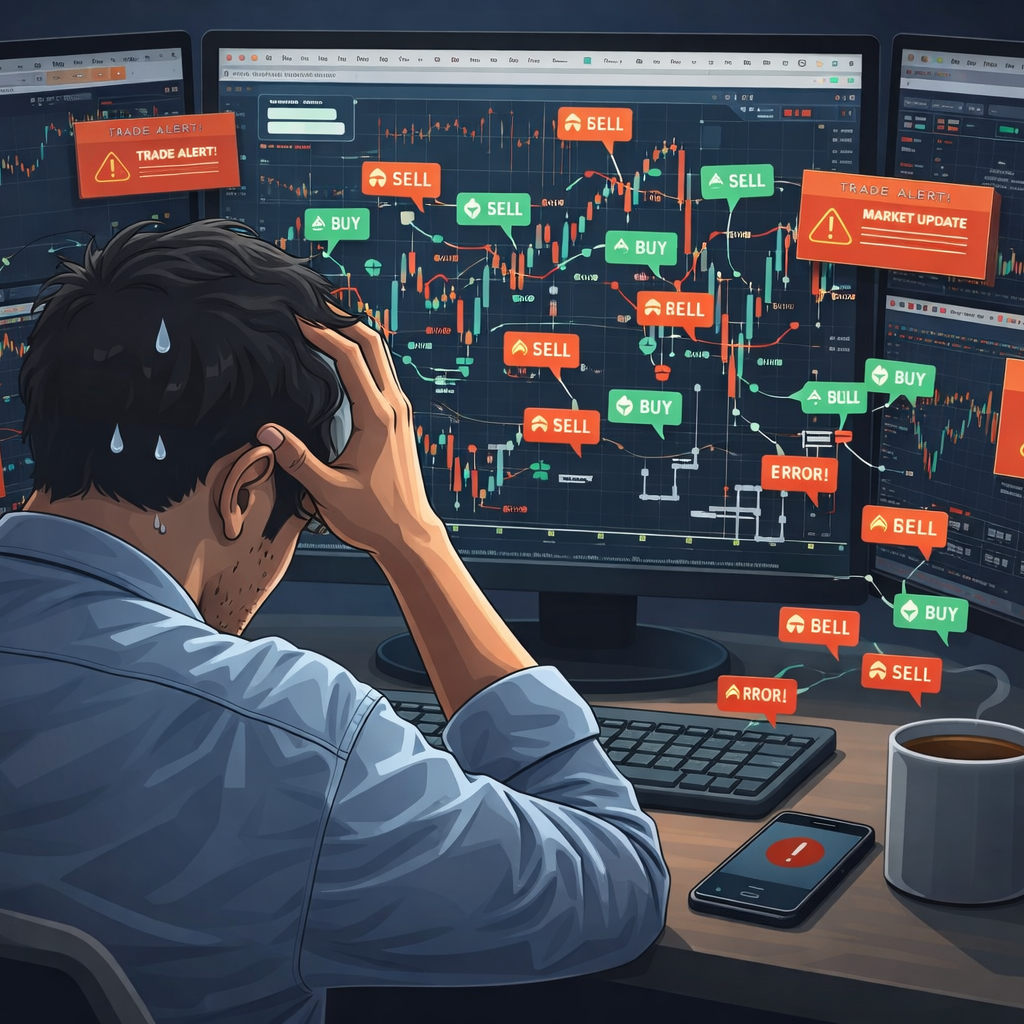
Many traders don’t lose money because their strategy is bad.
They lose money because they trade too much or chase trades they never planned.
Two behaviors cause this more than anything else: overtrading and FOMO (Fear of Missing Out).
These mistakes are especially common among beginners—but even experienced traders struggle with them during losing streaks or volatile markets. Understanding and controlling these habits is critical if you want to survive long enough to become consistent.
What Is Overtrading?
Overtrading is when you take more trades than your plan allows, often for emotional reasons rather than valid setups.
This usually happens when:
Overtrading lowers the average quality of your trades. The more you click without edge, the closer your results move toward randomness.
More trades do not mean more profits.
More trades usually mean more mistakes.
What Is FOMO (Fear of Missing Out)?
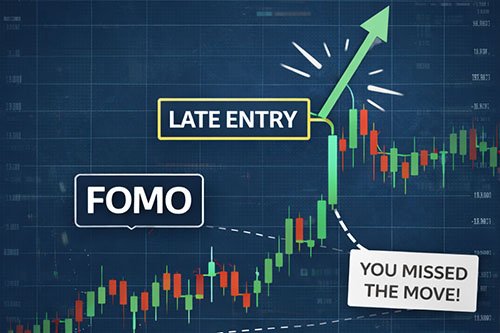
FOMO is the urge to enter a trade because price is already moving, not because it fits your plan.
It often looks like:
FOMO is driven by one thought:
“What if I miss this?”
Ironically, traders who chase moves usually enter at the worst possible price—right before a pullback, reversal, or consolidation.
Why Overtrading and FOMO Are So Dangerous
Overtrading and FOMO don’t just hurt one trade—they damage your entire process.
Here’s how they slowly destroy accounts:
- Lower Win Rate
When you trade random or weak setups, your probability edge disappears. - Poor Risk Control
Chasing trades often leads to wider stops or no stops at all. - Emotional Trading Cycle
One bad trade leads to frustration → revenge trading → more losses. - Mental Exhaustion
Too many decisions drain focus and increase mistakes. - Loss of Confidence
When results swing wildly, traders start doubting even good setups.
This is why many traders say:
“I win when I follow my rules… and lose when I don’t.”
The Psychology Behind Overtrading
The human brain is wired to seek action, especially when money is involved.
Markets trigger:
- Dopamine from fast moves
- Fear of being left behind
- Ego when trying to “prove” something after a loss
Overtrading isn’t a knowledge problem.
It’s a self-control problem.
That’s why discipline matters more than strategy.
How to Stop Overtrading and FOMO
You don’t fix these habits with motivation.
You fix them with structure.
Here are practical rules that work:
1. Limit Trades Per Day
Decide your maximum number of trades before the session starts (for example, 1–2 trades).
When the limit is hit, you stop—no matter what the market does.
2. Trade a Checklist
Create a short checklist (trend, level, confirmation, risk).
If even one item is missing, it’s a no-trade.
Rules remove emotion.
3. Time-Box Your Trading
Only trade during your best hours.
Outside that window, you are an observer—not a participant.
4. Accept Missed Trades
Missing a trade is not a loss.
Chasing a bad trade is.
Professional traders are comfortable watching price move without them.
5. Journal the Urge
Every time you feel the urge to click, write why.
Patterns appear quickly—and awareness reduces impulse.
A Key Truth Most Traders Learn Too Late
You don’t get paid for being active.
You get paid for being selective.
Trading success often looks boring:
- Fewer trades
- Smaller losses
- More waiting
- More patience
Consistency comes from saying “no” far more often than “yes.”
Final Thought
Overtrading and FOMO are not character flaws.
They are untrained habits.
With rules, routines, and self-awareness, they can be controlled.
At KamyaabLab, we focus on helping traders build habits that protect their capital first—because you can’t grow an account you’ve already blown.
Discipline keeps you in the game.
Related Reading to Strengthen Your Trading Discipline
Why Most Beginners Lose Money
Most beginners lose money by overtrading, chasing indicators, ignoring risk, and letting emotions control decisions. Without rules, patience, and discipline, even good strategies fail consistently.
1% Rule in Trading
The 1% rule limits risk per trade to protect capital, reduce emotional pressure, and ensure survival during losing streaks, allowing traders to stay consistent and grow steadily over time.
Trading Psychology
Most traders don’t fail due to bad strategies—but poor discipline. Emotional decisions, overtrading, and inconsistency destroy results. Psychology and disciplined habits matter far more than finding the “perfect” setup.
Beginner Trading Insights
The Complete Beginner Trading System: Rules, Risk, Psychology & Execution
The Complete Beginner Trading System: Rules, Risk, Psychology & Execution Why Most Beginner Traders Lose…

Can You Make $1,000 Per Day Trading? The Honest Truth
Can You Make $1,000 Per Day Trading? The Honest Truth Can you make 1000 per…
Trading Psychology: Why Discipline Matters More Than Strategy
Trading Psychology: Why Discipline Matters More Than Strategy Most beginner traders believe success comes from…
Why Most Beginners Lose Money
Why Most Beginners Lose Money in Trading If trading was as easy as buying and…
Trading Basics
The 1% Rule in Trading A Beginner’s Guide to Risk Management That Actually Works The…