
⬅ Course Home | Next: Module ➡

Market Structure For Beginners
1. Why Market Structure Matters
Market structure for beginners explains how price moves, who controls the market, and when traders should enter or stay out.
Structure tells you:
Every single setup in this course depends on structure.

2. The Three Market Conditions
1. Trend (Uptrend or Downtrend)

Uptrend
Higher Highs (HH) & Higher Lows (HL)

Downtrend
Lower Highs (LH) + Lower Lows (LL)
2. Range (Sideways Market)
Price moves between support and resistance without breaking out. Ranges create:
💡 Beginners lose the most money in ranges.
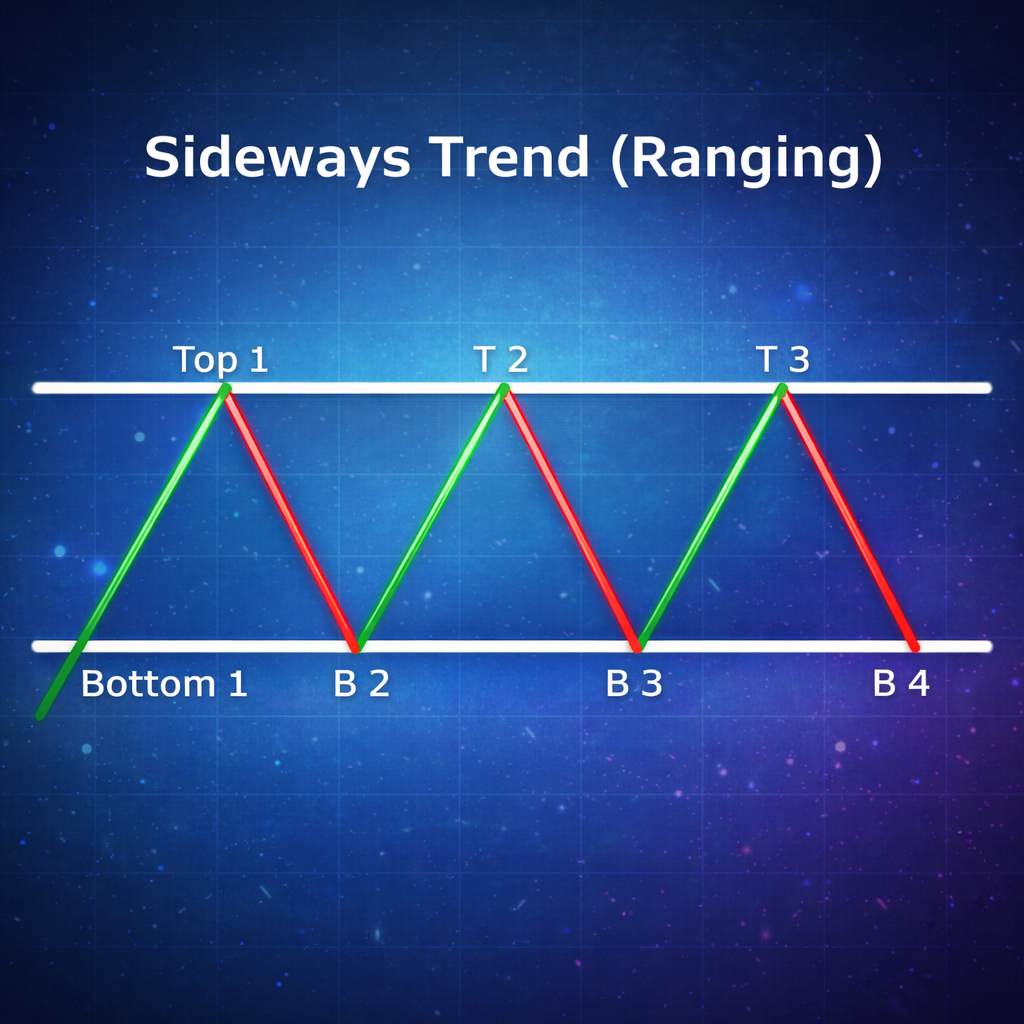
Sideways Trend
2. Breakout / Breakdown
📌 IMPORTANT: Never enter a breakout before the candle closes.
💡 Wait for a real break & retest
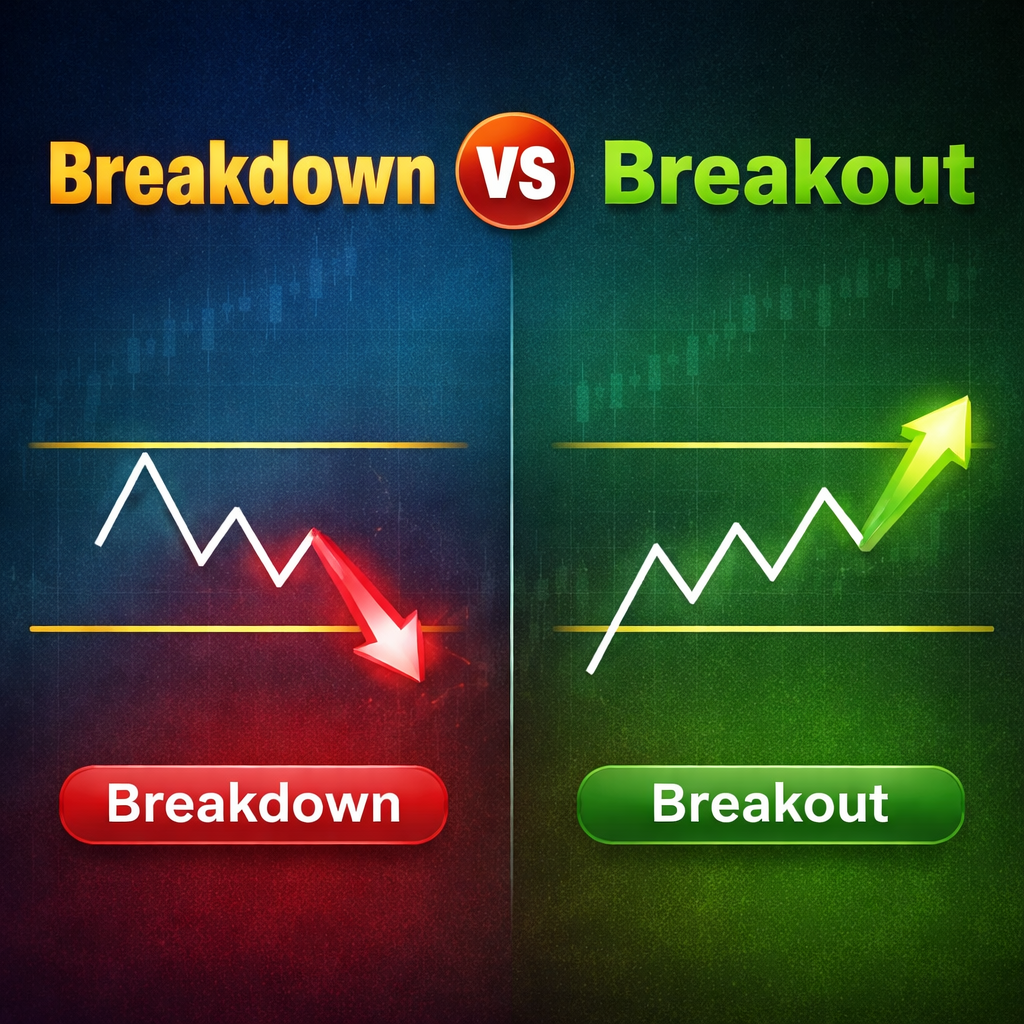
Breakout / Breakdown
📌 PRO TIP: Always start analysis on a higher timeframe (1H / 4H / Daily) and then drill down.
3. Key Levels You Must Identify
Before taking any trade, mark these:

Support
Area where buyers have stepped in before
Resistance
Area where sellers have stepped in before
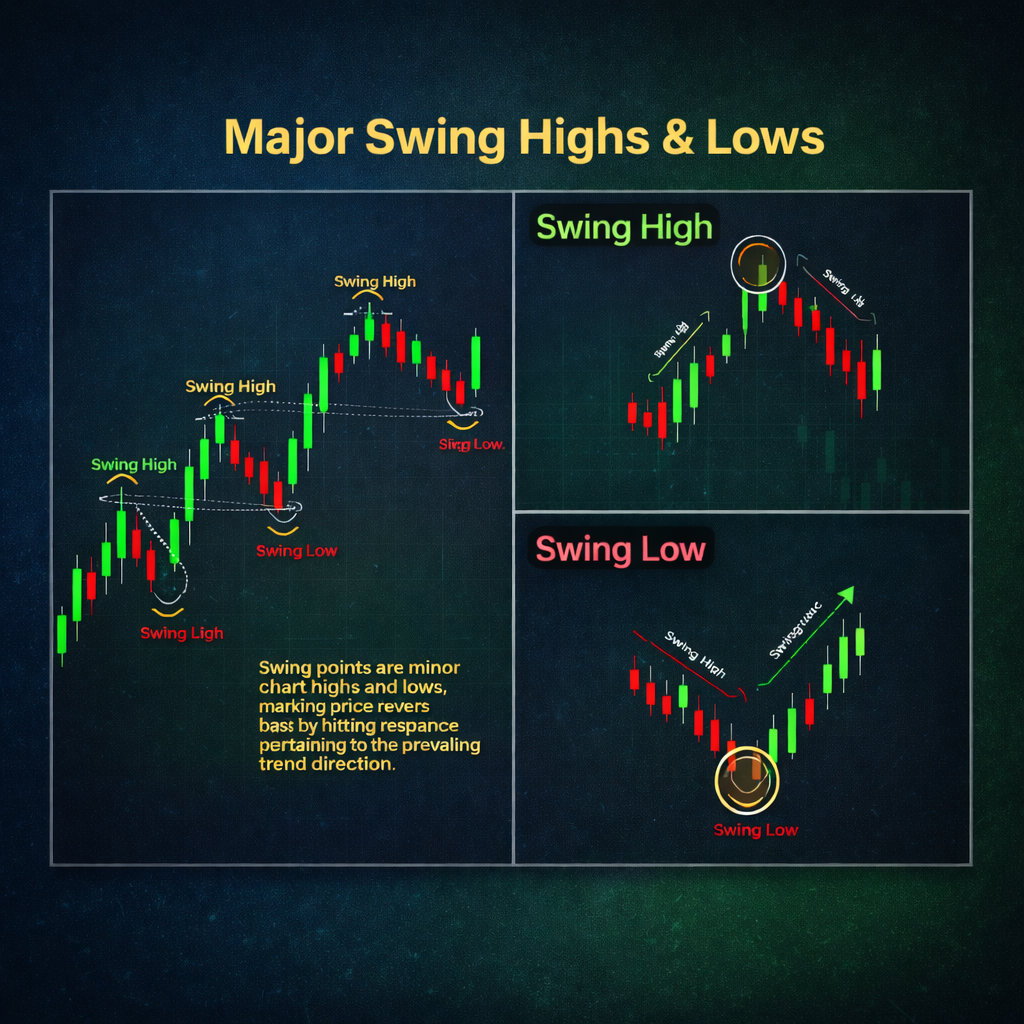
Major Swing Highs & Lows
These structure points help you determine trend direction
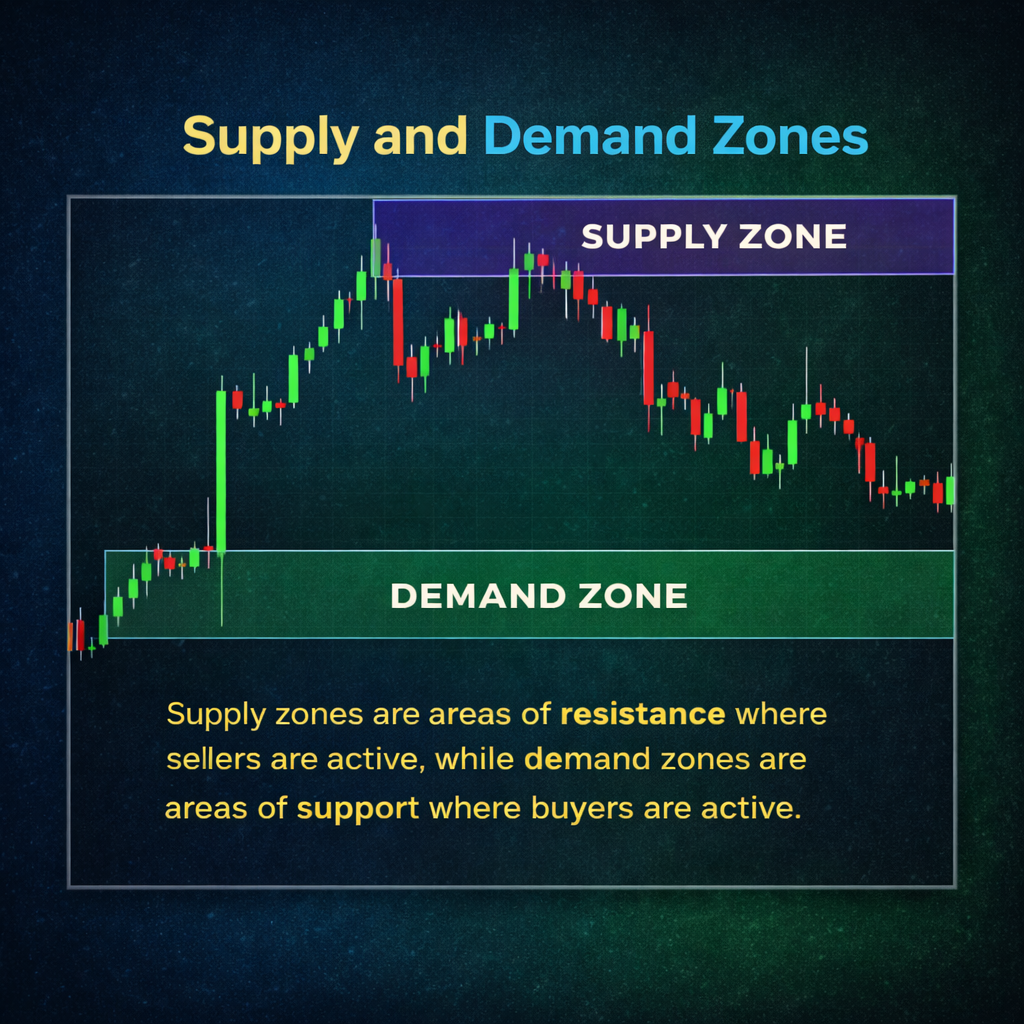
Demand & Supply Zones
Area where buyers or sellers aggressively pushed price
📌 PRO TIP: Mark levels only on 15m, 1H, and 4H. Too many lines leads to confusion.
4. Which Timeframes to Use (Beginner-Friendly)
Start with the 4H chart to understand the main market direction. Use the 1H chart to see the immediate trend within that direction, and the 15-minute chart for precise entries and confirmation. Avoid 1-minute or 3-minute charts for now—they add noise and confusion. These lower timeframes should only be used after you fully understand market structure.
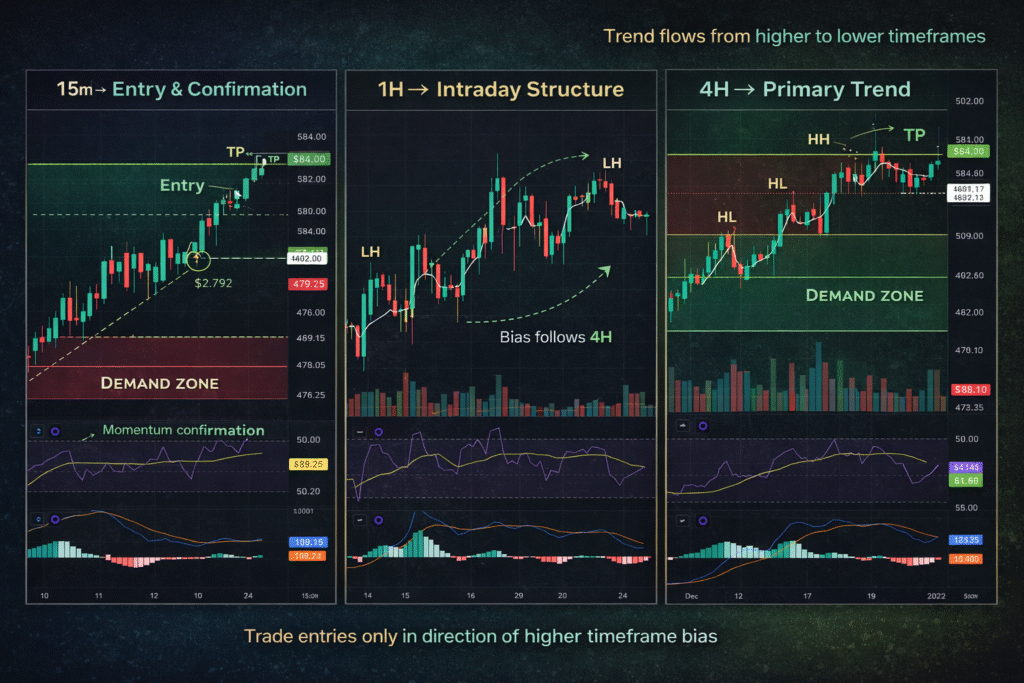
Always trade from higher timeframe to lower timeframe.
Direction comes from 4H, structure from 1H, and entries from 15m.
Lower timeframes are distractions until structure is mastered.
5. How to Read Market Structure Step-by-Step
Start on 4H
Drop to the 1H
Drop to the 15m
📌 Golden Rule: If 4H, 1H, and 15m all point in the same direction → HIGH PROBABILITY trade.
6. Common Beginner Mistakes (Avoid These)
🔥 Remember: You make money by following rules, not by predicting.
7. Homework Before Module 3
Practice these on TradingView:
Your job is to see structure clearly before learning entries.
Beginner Trading Insights

The Complete Beginner Trading System: Rules, Risk, Psychology & Execution
The Complete Beginner Trading System: Rules, Risk, Psychology & Execution Why Most Beginner Traders Lose…

Overtrading & FOMO: The Silent Account Killers for Traders
Overtrading & FOMO: The Silent Account Killers for Traders Many traders don’t lose money because…

Can You Make $1,000 Per Day Trading? The Honest Truth
Can You Make $1,000 Per Day Trading? The Honest Truth Can you make 1000 per…

Trading Psychology: Why Discipline Matters More Than Strategy
Trading Psychology: Why Discipline Matters More Than Strategy Most beginner traders believe success comes from…
⬅ Course Home | Next: Module ➡