
⬅ Course Home | Next: Module ➡
Trading Psychology & Discipline
Trading psychology and discipline decide whether a trader stays consistent or keeps repeating the same mistakes. In this module, you’ll learn how emotions affect decisions and how to build a routine that protects your account.
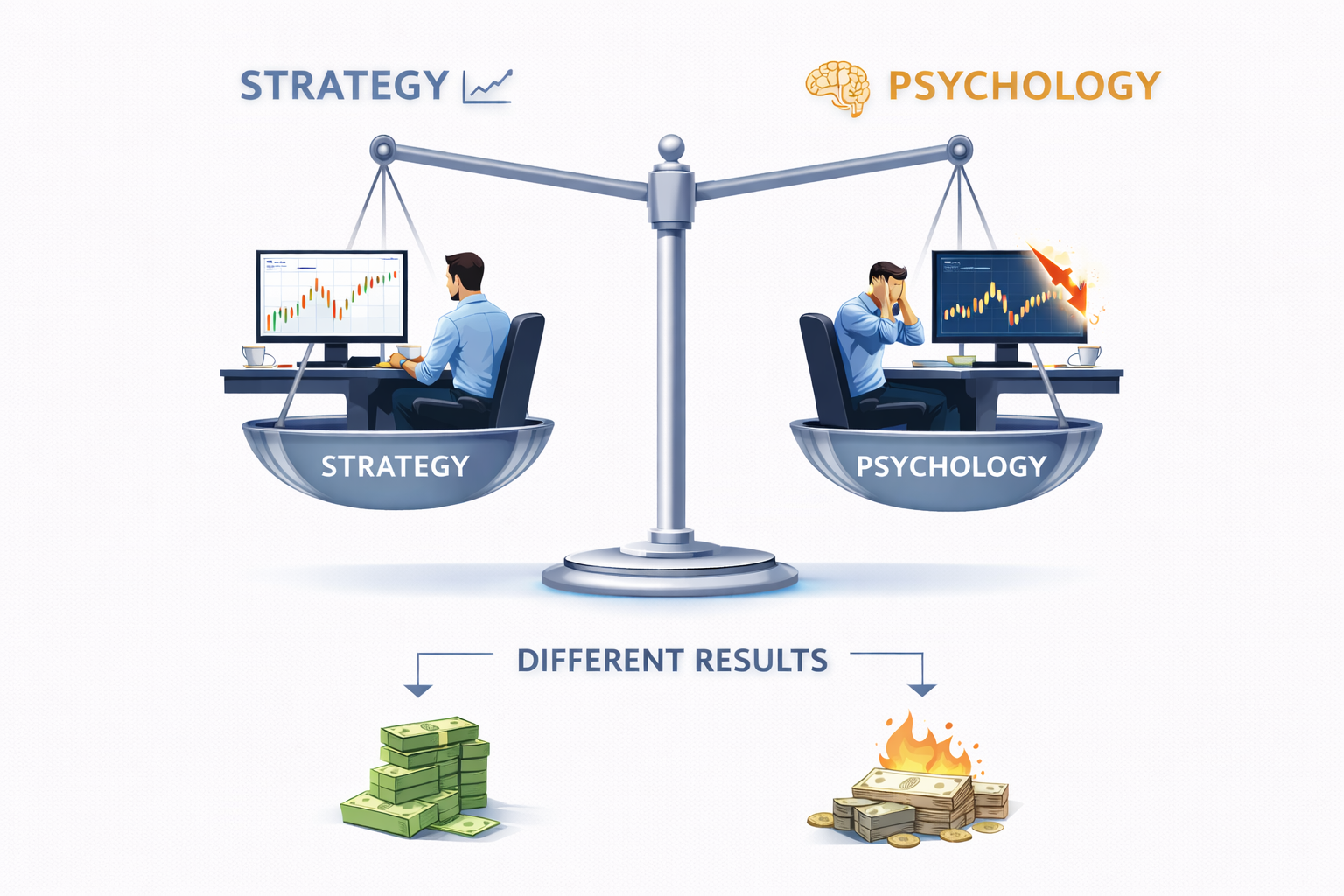
1. Psychology vs Strategy: What Really Controls Results
Most beginner traders believe success comes from finding the perfect strategy.
In reality, behavior decides outcomes.
Two traders can use the same setup:
A simple strategy executed with discipline will outperform a complex strategy executed emotionally.
👉 Your mindset is the system behind your system.
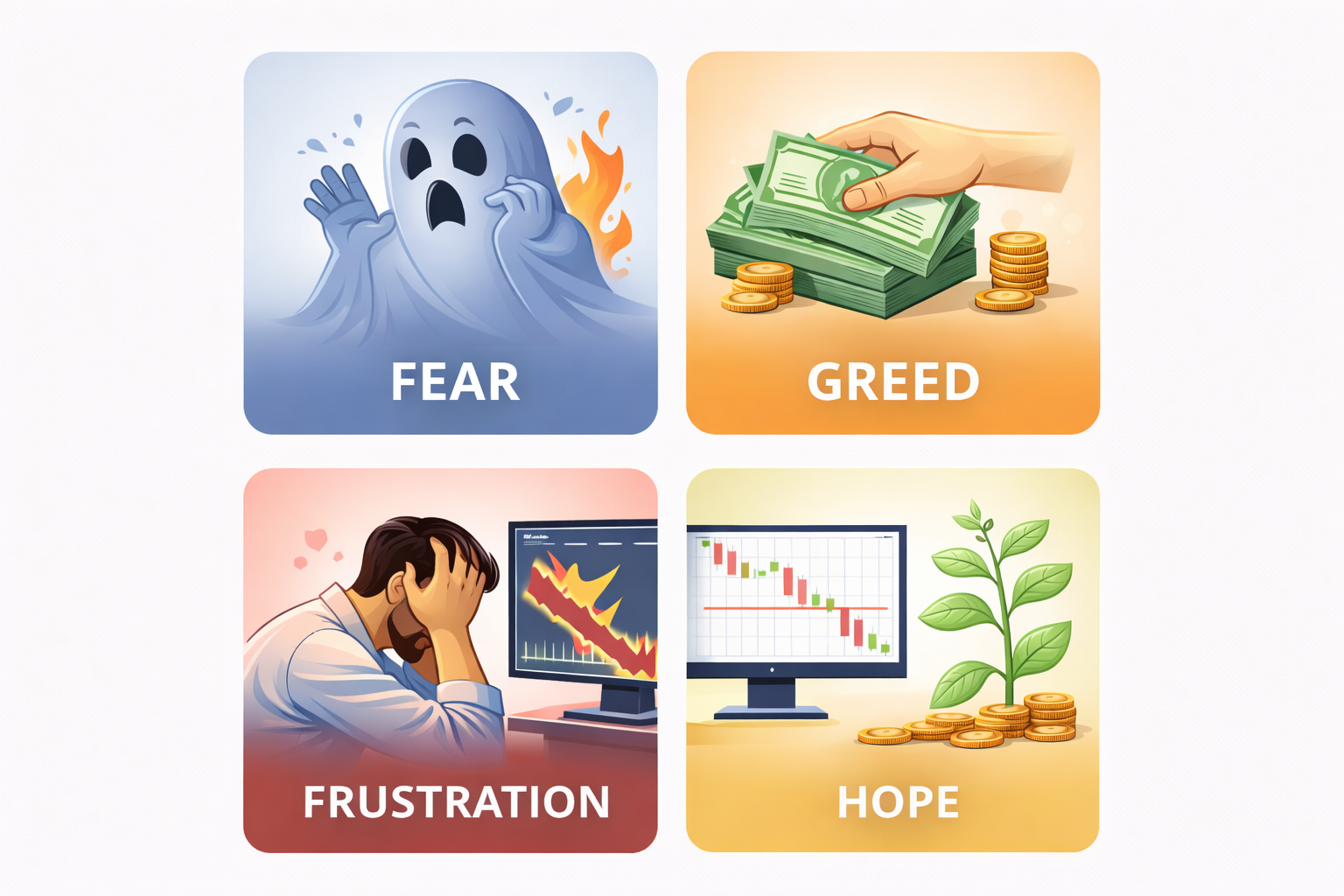
2. The 4 Emotions That Destroy Trades
Every losing trader struggles with the same four emotions:
The goal is not to eliminate emotion.
The goal is to follow rules even when emotions are present.
3. Discipline Is Not Willpower
Discipline isn’t “willpower.” It’s having a routine that reduces decisions. When your day has a structure—pre-market plan, entry checklist, risk rule, and post-trade review—you rely less on feelings and more on process. This is how consistency is built.
Many traders think discipline means:
That’s wrong.
Real discipline = Rules + Routine
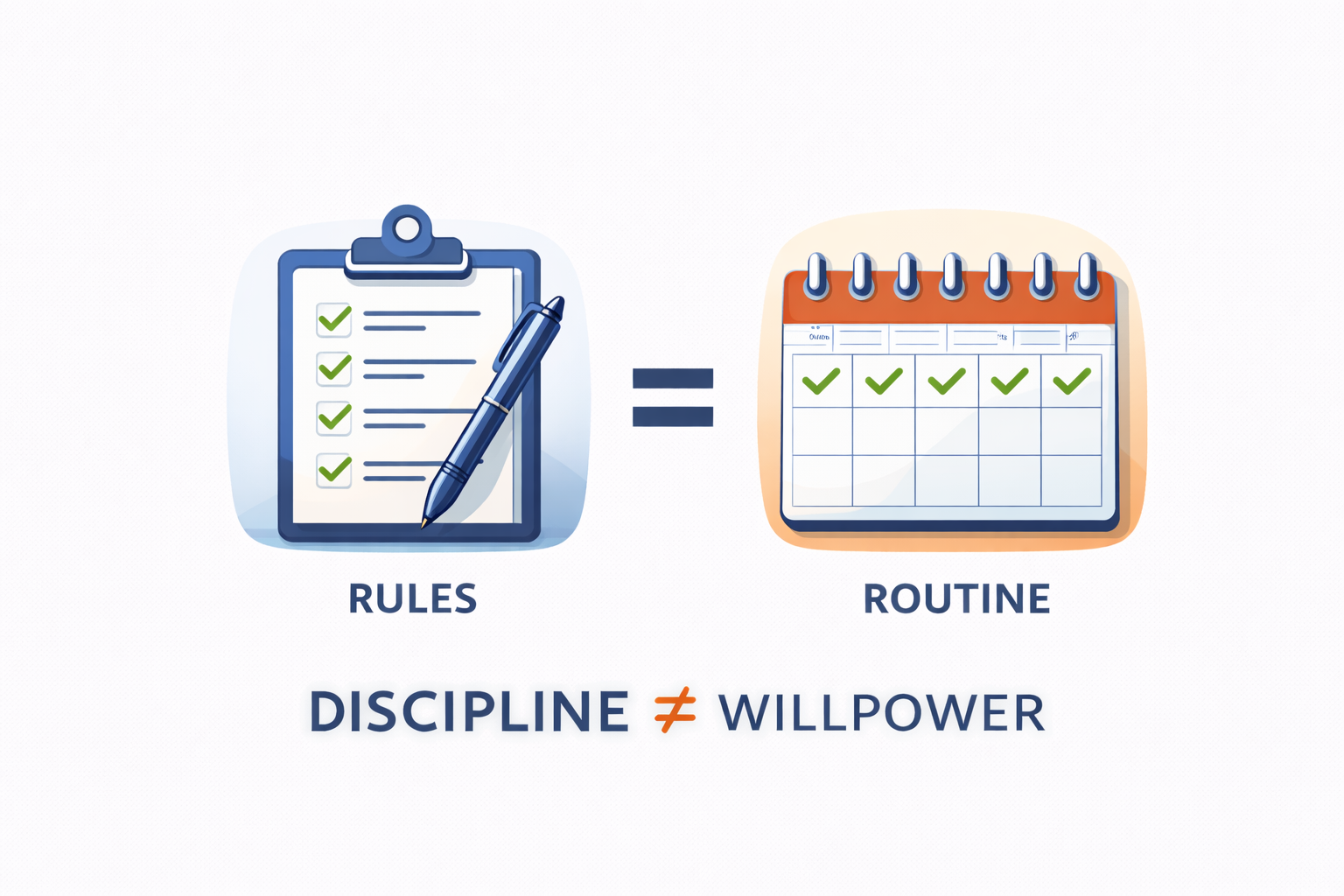
When decisions are planned before the trade, emotions have far less influence over your actions. You’re no longer reacting to price movement in the moment. Instead, execution becomes almost automatic, consistency improves, and discipline is already in place—because real discipline is built outside the trade, not while emotions are active.
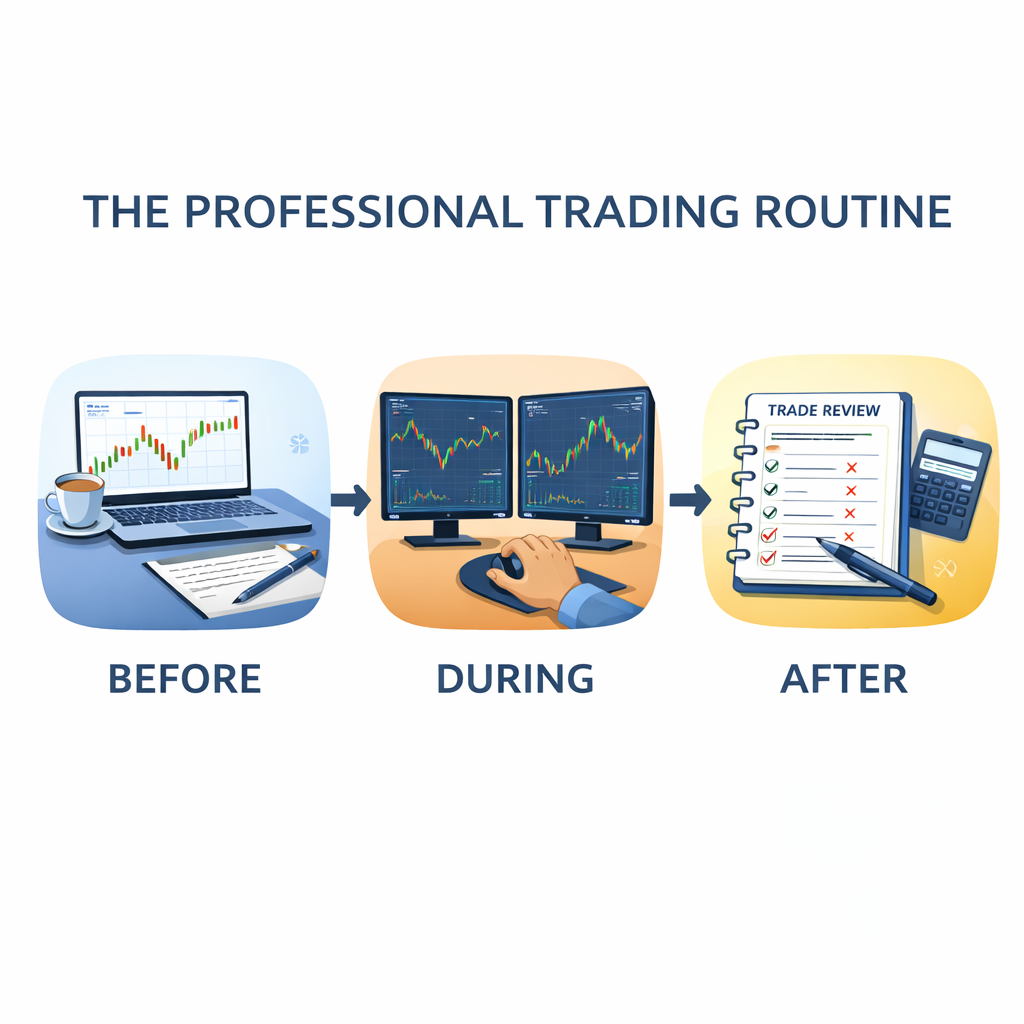
4. The Professional Trading Routine
Before the trade
During the trade
After the trade
👉 Boring routines create consistent results.
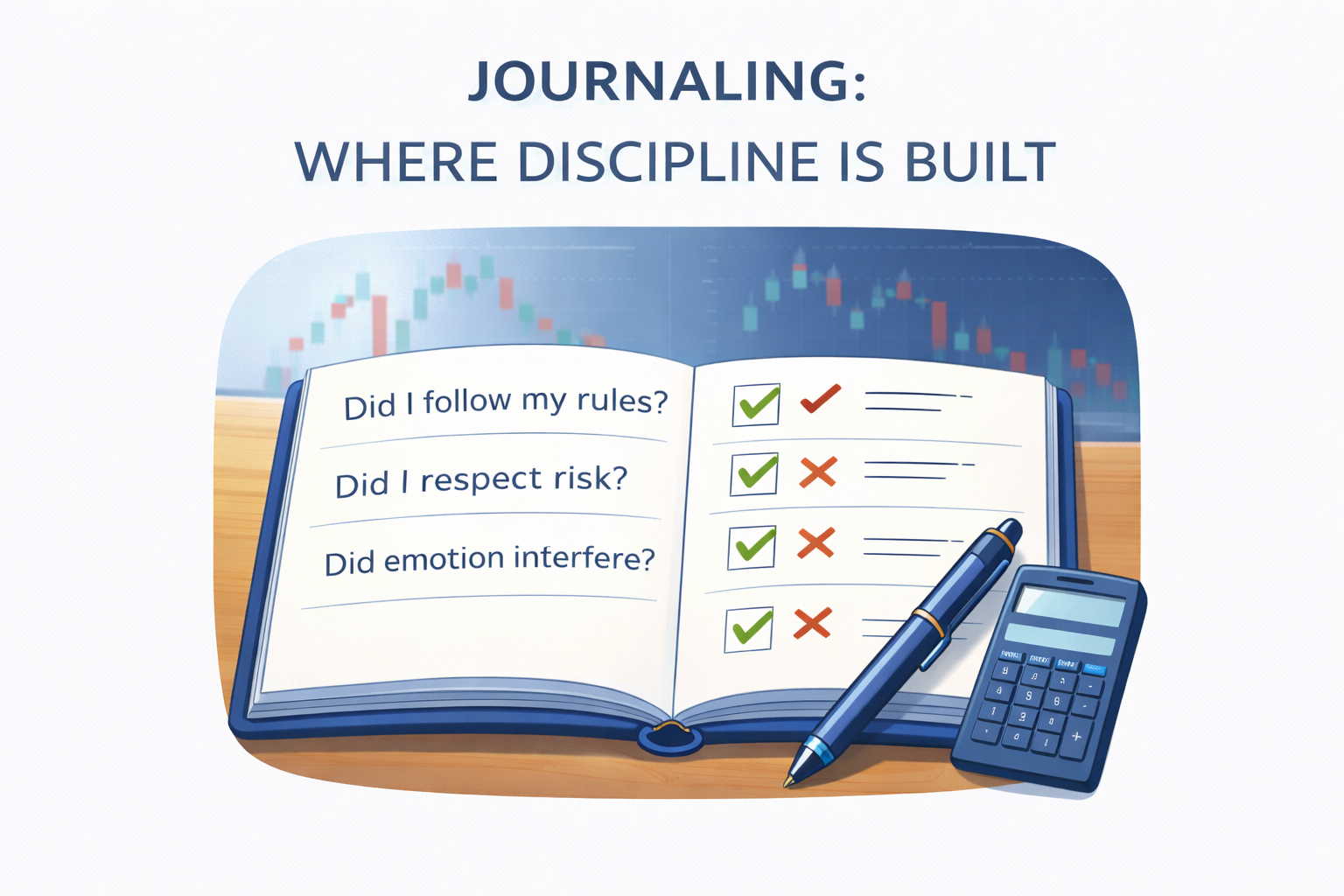
5. Journaling: Where Discipline Is Built
Discipline is not built during the trade.
It is built after the trade.
A proper journal tracks:
Winning traders don’t measure success by profit alone. They focus on execution—following their rules, managing risk, and staying disciplined—because consistent execution is what produces long-term profitability.
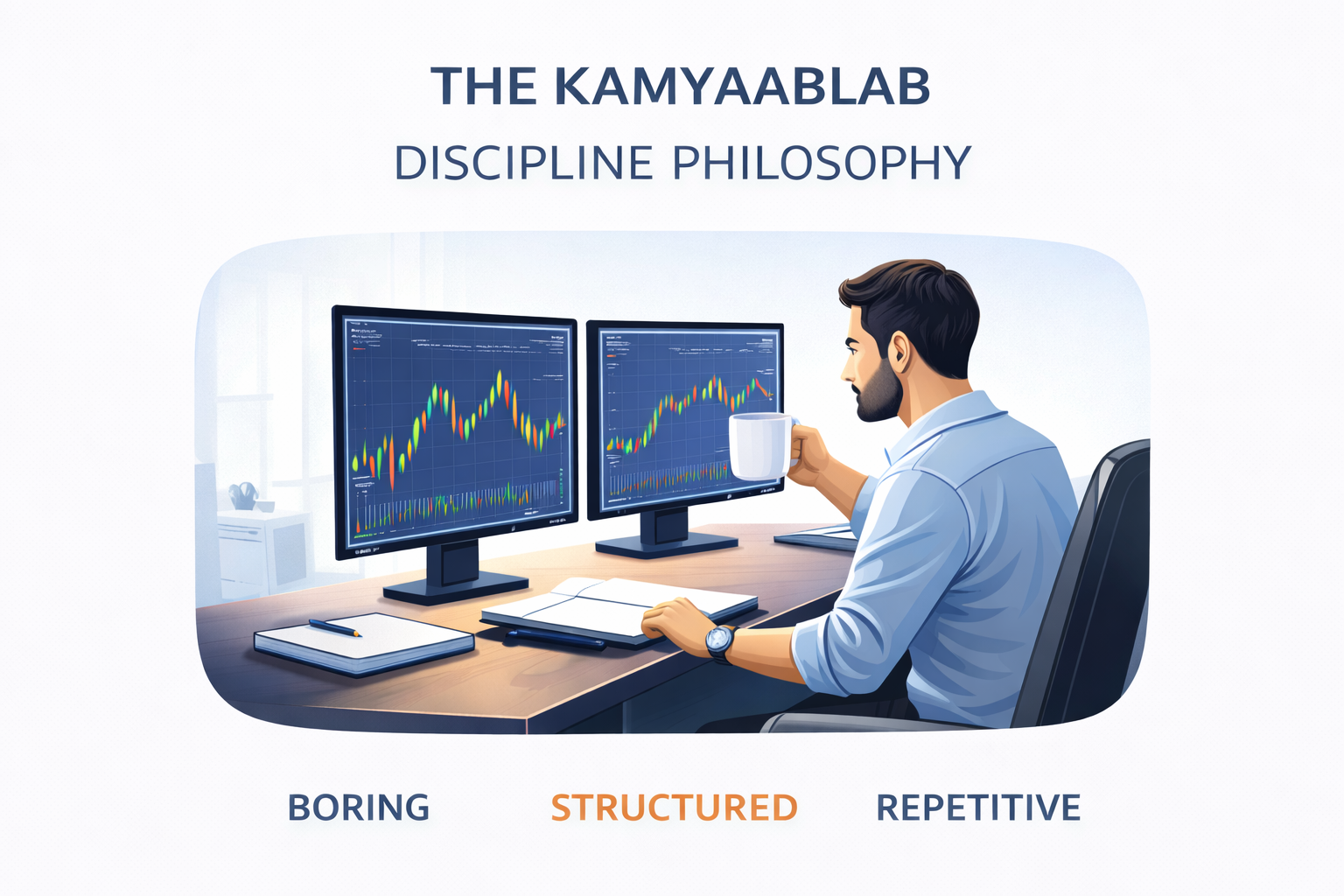
6. The KamyaabLab Discipline Philosophy
Trading success is:
At KamyaabLab, we don’t teach hype.
We teach habits that keep traders in the game long enough to win.
👉 Survival → Consistency → Growth
🎯 Module 5 Outcomes
By the end of this module, you will:
Beginner Trading Insights

The Complete Beginner Trading System: Rules, Risk, Psychology & Execution
The Complete Beginner Trading System: Rules, Risk, Psychology & Execution Why Most Beginner Traders Lose…

Overtrading & FOMO: The Silent Account Killers for Traders
Overtrading & FOMO: The Silent Account Killers for Traders Many traders don’t lose money because…

Can You Make $1,000 Per Day Trading? The Honest Truth
Can You Make $1,000 Per Day Trading? The Honest Truth Can you make 1000 per…

Trading Psychology: Why Discipline Matters More Than Strategy
Trading Psychology: Why Discipline Matters More Than Strategy Most beginner traders believe success comes from…
⬅ Course Home | Next: Module ➡