
⬅ Course Home | Next: Module ➡

Mastering the Trader Mindset
Master the trader mindset by building discipline, emotional control, and consistency. Learn how successful traders think, manage risk, and execute decisions calmly under pressure in real market conditions.
1. Trader vs Investor Mindset
Traders operate under speed, uncertainty, and pressure — unlike investors who research patiently and hold long term. This difference completely changes how decisions and emotions work in the brain.
Key differences:
Core Truth: A trader doesn’t need to be right — they need to be consistent.

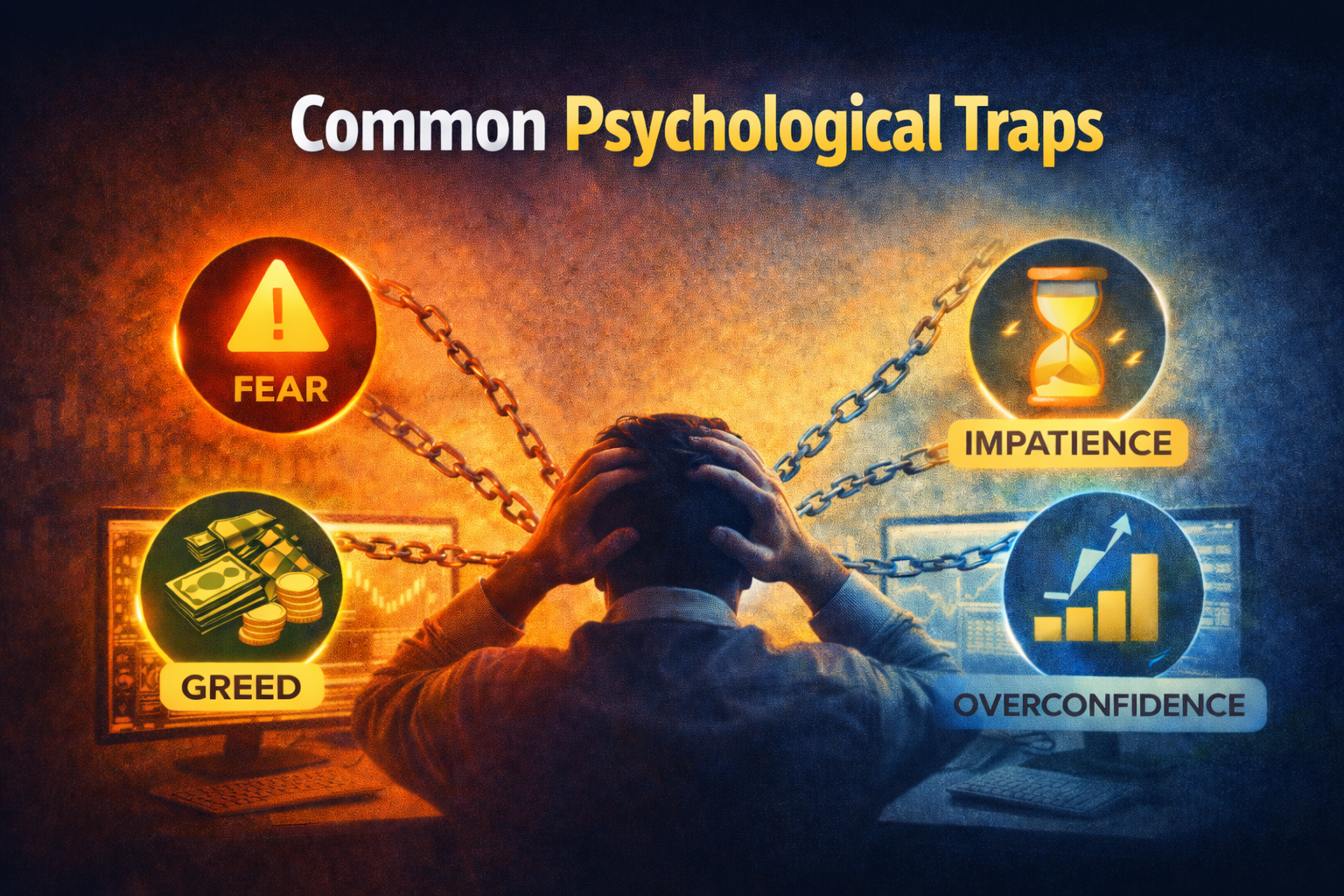
2. Common Psychological Traps
Most losing trades don’t come from bad analysis but from predictable mental traps like fear, greed, impatience, and overconfidence, which cause traders to break rules, mismanage risk, and abandon discipline under pressure.
The biggest ones:
✍️ Reflection Exercise:
Which habit hurts you the most — fear, greed, or revenge?
Write it down. Awareness is the first step to control.
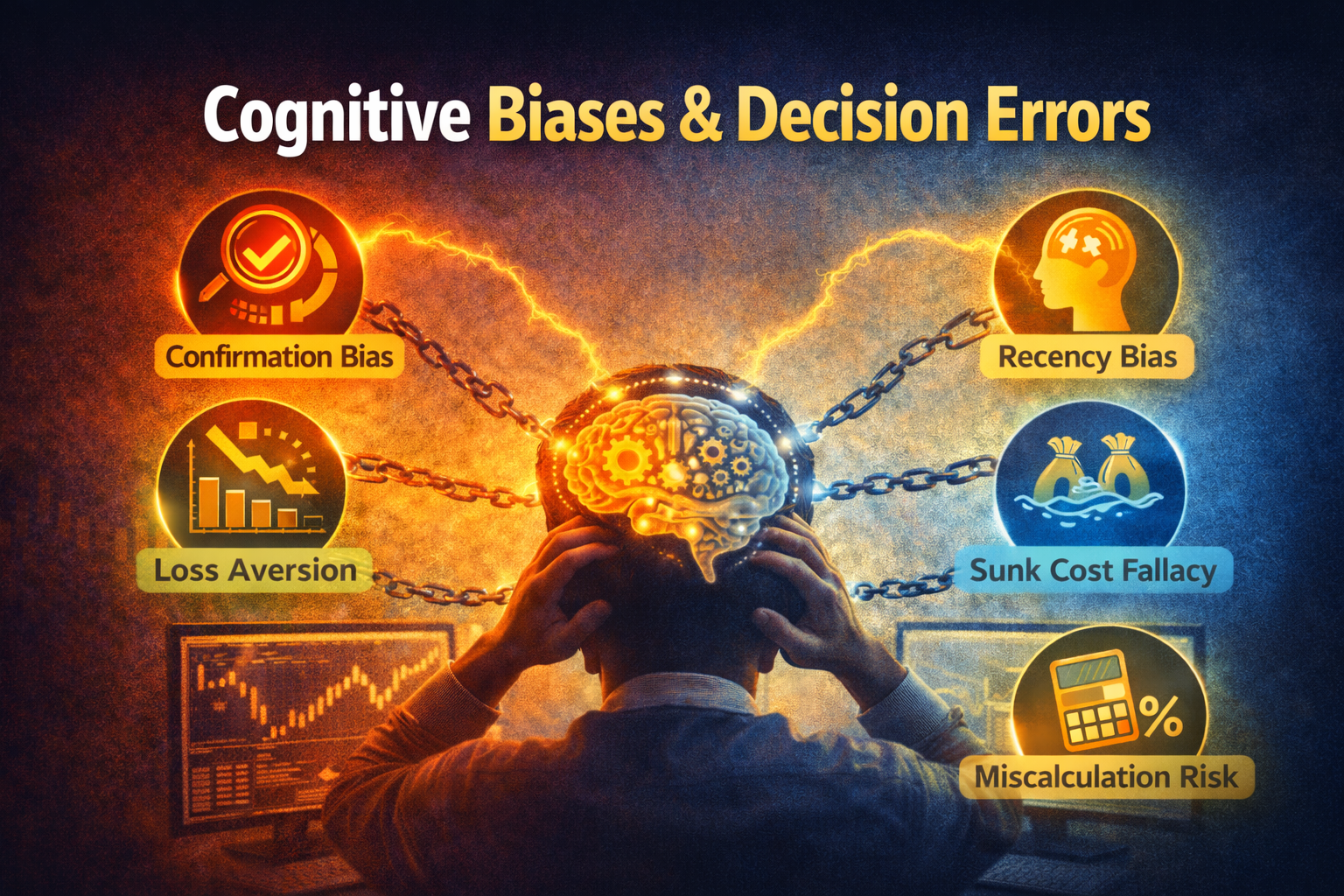
3. Cognitive Biases & Decision Errors
Your brain is wired for survival, not trading, and these built-in psychological biases distort judgment under pressure, leading traders to react emotionally, mismanage risk, and make impulsive decisions instead of following rules.
Key biases every trader must manage:
Important Reminder:
You don’t lose because the market is against you; you lose when your mind goes unchecked, allowing fear, bias, and emotion to override logic, discipline, and risk management in critical trading decisions.
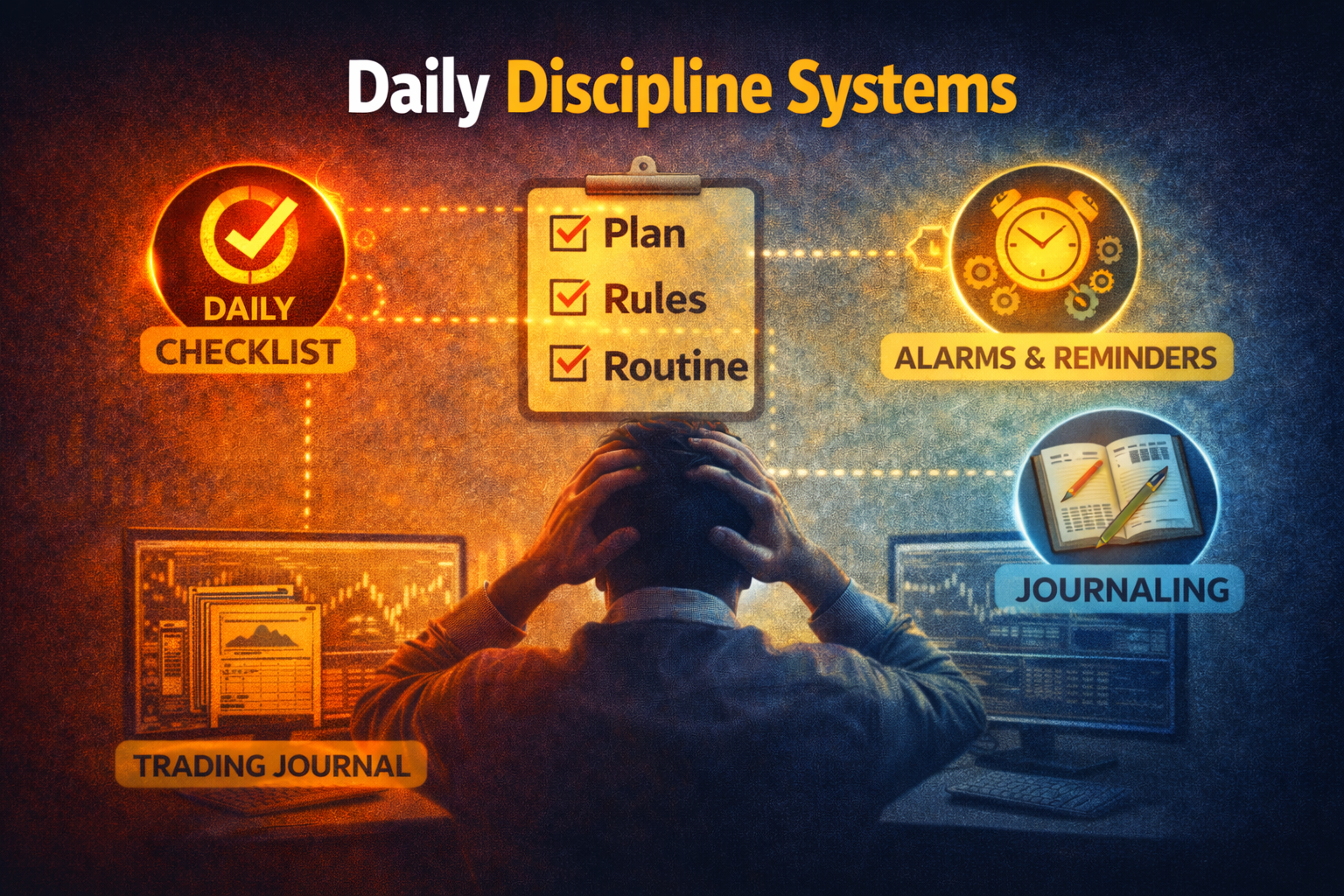
4. Daily Discipline Systems
Discipline should never rely on willpower in the moment. Professional traders build daily systems and routines that make discipline automatic, protecting decisions and execution when emotions run high.
Key systems include:
🚨 Hard Rule: If you’re emotional after a loss, the correct move is to stop trading for the session. Well-designed systems exist to protect you from emotional decisions that can turn small losses into big mistakes.
5. Identity & Habit Change
Trading success is driven by identity, not just knowledge. What you believe about yourself shapes your habits, reactions, and decisions under pressure, ultimately determining whether you act consistently or repeat the same mistakes.
Core Idea:
Daily Identity Habit
Name one identity shift each week, such as “I am a calm, rule-based trader,” and write it in your journal. Read it before trading. Consistent traders don’t fight emotions—their identity keeps actions aligned even under pressure.

6. Trade Journaling for Psychology
Your trading journal is not just data—it’s a mirror of your decisions, emotions, and habits. Reviewing it daily reveals patterns, exposes mistakes, and builds the self-awareness required for long-term trading consistency.
Track the following for each trade:
Over time, consistent journaling builds deep self-awareness by revealing your patterns, emotions, and mistakes. That awareness naturally strengthens discipline, helping you correct behavior, follow rules, and improve execution trade after trade.

Practical Assignments (Must Do)
- Write down your worst psychological trading habit
- Build a routine for:
- Before trading
- During trades
- After the session
- Review 10 past trades and label:
- Emotion
- Bias involved
Progress comes from reflection, not revenge trading.
Beginner Trading Insights

The Complete Beginner Trading System: Rules, Risk, Psychology & Execution
The Complete Beginner Trading System: Rules, Risk, Psychology & Execution Why Most Beginner Traders Lose…

Overtrading & FOMO: The Silent Account Killers for Traders
Overtrading & FOMO: The Silent Account Killers for Traders Many traders don’t lose money because…

Can You Make $1,000 Per Day Trading? The Honest Truth
Can You Make $1,000 Per Day Trading? The Honest Truth Can you make 1000 per…

Trading Psychology: Why Discipline Matters More Than Strategy
Trading Psychology: Why Discipline Matters More Than Strategy Most beginner traders believe success comes from…
⬅ Course Home | Next: Module ➡